04 May 2026
Our Rationale for Dataset DOIs
This post is part of a multi-part series on DOIs
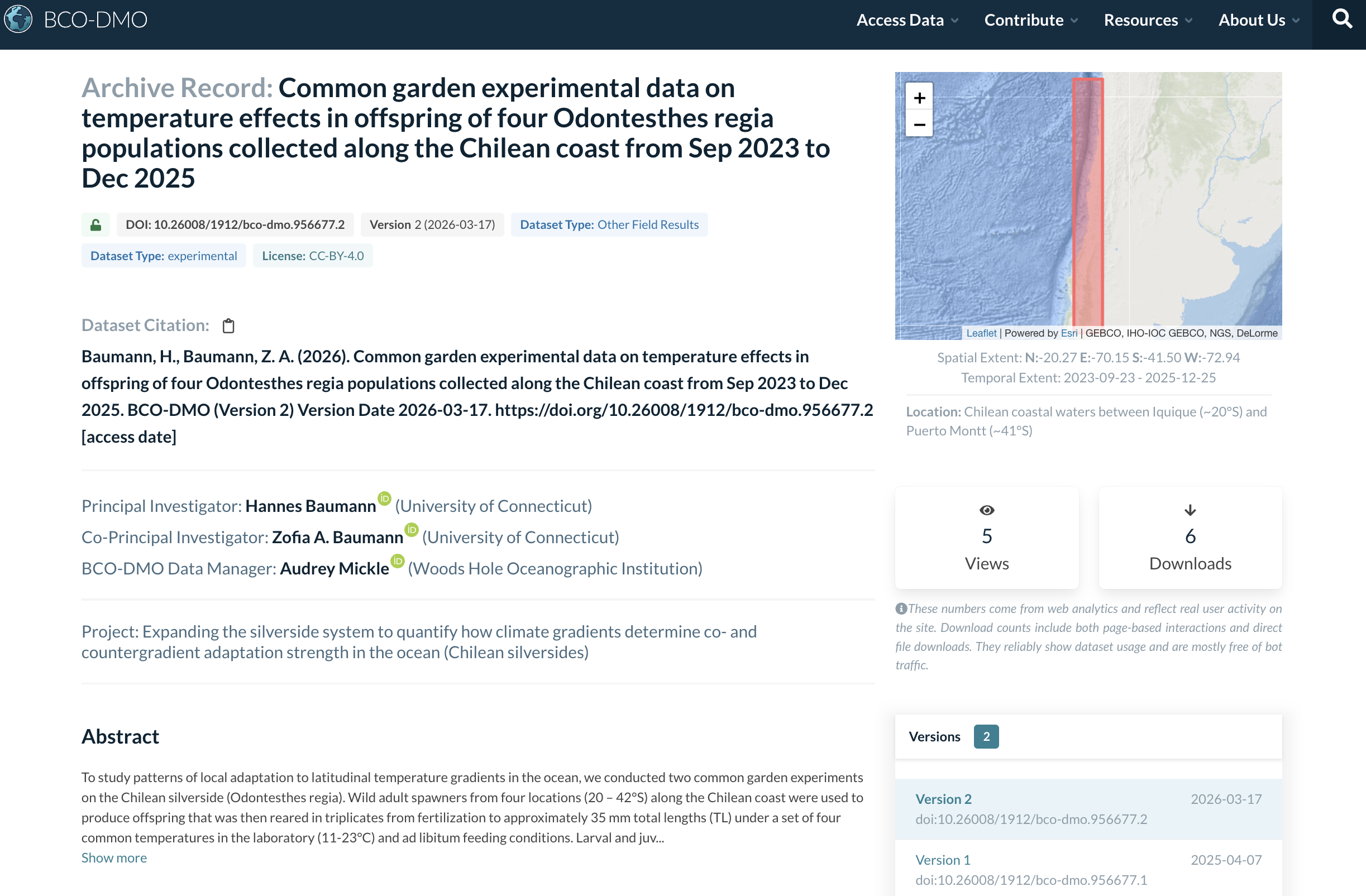
https://www.bco-dmo.org/doi/dataset/10.26008/1912/bco-dmo.956677.2
Dataset Digital Object Identifiers (Data DOIs) are unique and persistent alphanumeric strings assigned to a collection of data files and metadata at a specific point in time (i.e., a particular dataset version). Providing them to a journal along with your manuscript has become a routine part of the scholarly publication process… and that’s a good thing! DOIs identify specific data versions, aid in data discovery, and facilitate data author attribution. BCO-DMO was early on the dataset DOI scene, collaborating with our Institutional library back in 2011 to mint DOIs for the published datasets that BCO-DMO curates, long before current data DOI services were established. As of December 2025, we’ve joined DataCite as a minting agent and have begun hosting DOI webpages as part of our data curation and publication process. Why? There are actually several reasons that we’d like to share with you…
Alignment with our Mission: Previously, BCO-DMO DOI web pages were provided by WHOI’s institutional library. By hosting DOI webpages on the BCO-DMO website, we convey our commitment to the long-term preservation of our data catalog by becoming the responsible party, creating a clear chain of custodianship; aligning stewardship and accountability.
Disciplinary Stewardship: Domain-specific repositories work closely to respond to the needs of their communities. Hosting the DOI webpage allows us to incorporate community-relevant metadata as part of the DOI experience, making them more meaningful within our disciplinary context.
Trust and Authoritative Source Recognition: Users can trust that a DOI minted by BCO-DMO is backed by curated content from a highly trained BCO-DMO Data Manager that has worked with the data originators to make the data as clean, FAIR, and research-ready as possible, versus a dataset DOI from a generalist repository, where little to no disciplinary curation has happened.
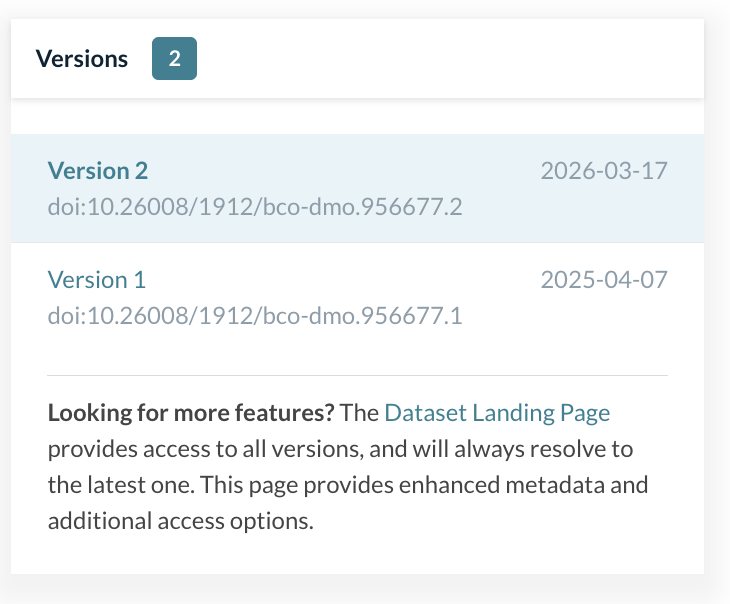
Specifying the version history of a dataset and providing a link to the most recent content for the dataset.
Improved User Experience: By hosting our own DOI webpages, we can achieve a more cohesive experience for our users, including both journal editors and reviewers. They can clearly see other versions of newer and older DOIs for the same dataset.
Versioning Control: BCO-DMO can implement its own versioning strategy, minting new DOIs that resolve to the latest versions quickly, along with clear access to the previous and later versions, without negotiating relevant workflows through an intermediary entity. See the image ‘Versioning Control’.
Landing Page Content Quality: Similarly, BCO-DMO now ensures the landing page is rich, machine-readable (e.g., with schema.org markup), and tailored to our mission and user needs, rather than a generic splash page. Our new DOI landing pages allow users to access discrete versions while also linking to the latest data.
Control and support for Linked Data and the PID Ecosystem: As always, we’ll continue to link out of the BCO-DMO system to other authoritative content such as related publications, cruises, and other data, but now you’ll see that we’ve linked data authors to their ORCiDs on our DOI landing pages, and we can create more connections contributing to the scholarly knowledge graph that a third-party cannot always support. See the image below for how ORCID ids are presented:

By gaining authority and technical control over the DOI webpage, BCO-DMO becomes a primary actor in the broader scholarly communication infrastructure. Our datasets will be more findable, trustworthy, and integrated into the research ecosystem. We invite you to take a look at your favorite published BCO-DMO dataset for the DOI page, and let us know what you think!
Last modified: 2026-05-04 11:36:00