03 July 2026
From Repository to Classroom
Turning Ocean Data into Teaching Tools

From Repository to Classroom: Turning Ocean Data into Teaching Tools
What happens when educators and data repositories unite? It can be like when chocolate met peanut butter — two great things that become even better together. That same kind of connection is at the heart of an effort to make real-world ocean data impactful for educators.
Why Real Data Matters in the Classroom
Educators already know the value of using data in their curricula. It can make abstract concepts tangible and help students connect classroom theory to real-world phenomena. It can also build the skills students increasingly need: data literacy, critical thinking, problem solving, and comfort working with complex information.
From a survey BCO-DMO conducted at Ocean Sciences 2026, we found that educators want to use real ocean data, but
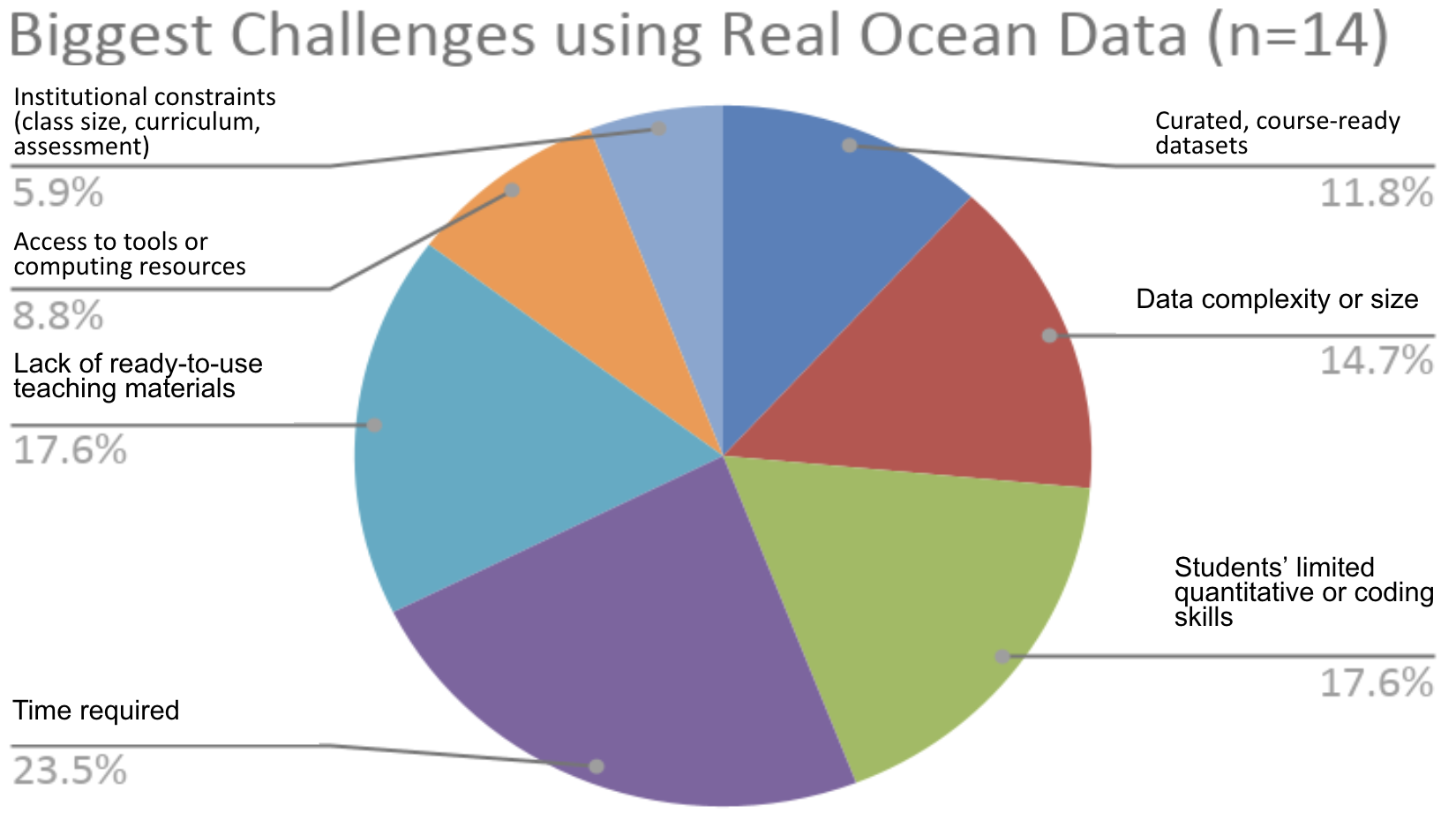
- they often lack the time, tools, or support needed to adapt research datasets for teaching;
- the datasets may be large, complex, or difficult to access; and
- students may arrive with limited quantitative, coding, or data-wrangling experience.
What we heard clearly from educators is this: the cognitive load needs to be reduced. Ultimately, the goal is to help students get to the “lightbulb moment” faster, where they can interrogate the data, test ideas, and make connections between the data and oceanographic concepts.
So, the question becomes: How can a research data repository help educators turn real-world ocean data into meaningful classroom experiences?
Why BCO-DMO Is Well Positioned to Help
BCO-DMO brings together a data management team with expertise across oceanography, informatics, data and software carpentry, data management training, and information sciences. The team understands the scientific context of the data and the technical skills needed to work with the data. We can help identify appropriate datasets, provide metadata and context summaries, support guided analyses, and host or link to educational products associated with research datasets. In other words, the repository can help create a bridge between research workflows and classroom workflows.
Examples in Practice: BIOS DataBytes
The Bermuda Institute of Ocean Sciences (BIOS), developed DataBytes, a teaching resource that uses datasets hosted at BCO-DMO. The goal was to take data and core scientific concepts from researchers and make them available to educators and their classrooms in a streamlined format. BIOS and BCO-DMO provided reciprocal links, making the educational materials and the underlying data easier to discover together. The result was a successful example of how a research data repository and an educational institution can collaborate to support classroom learning.
That success inspired us to dig deeper on a larger vision for partnership with educators.
The Vision: Educator Use Case + BCO-DMO Data = Teaching Tool
Educators know their students, their learning goals, their course levels, and their classroom constraints. BCO-DMO brings the data expertise.
Chocolate. Peanut Butter.
The vision is to bring those strengths together. If educators can share specific teaching use cases, BCO-DMO can help identify appropriate datasets and support the development of teaching tools around them.
An educator use case might include:
- What concept do you want students to learn?
- What learning outcomes are you targeting with real-world data?
- What types of data are needed?
- What data competencies do students already have, and which ones need support?
- What course level are you teaching?
With that information, BCO-DMO and educators can work together to develop resources such as:
- Guided example analyses
- Metadata and context summaries
- Instructor notes
- Computational notebooks
- Suggested discussion questions
The result is a curated teaching layer: a bridge from BCO-DMO datasets to classroom-ready learning experiences.
What Might These Teaching Tools Look Like?
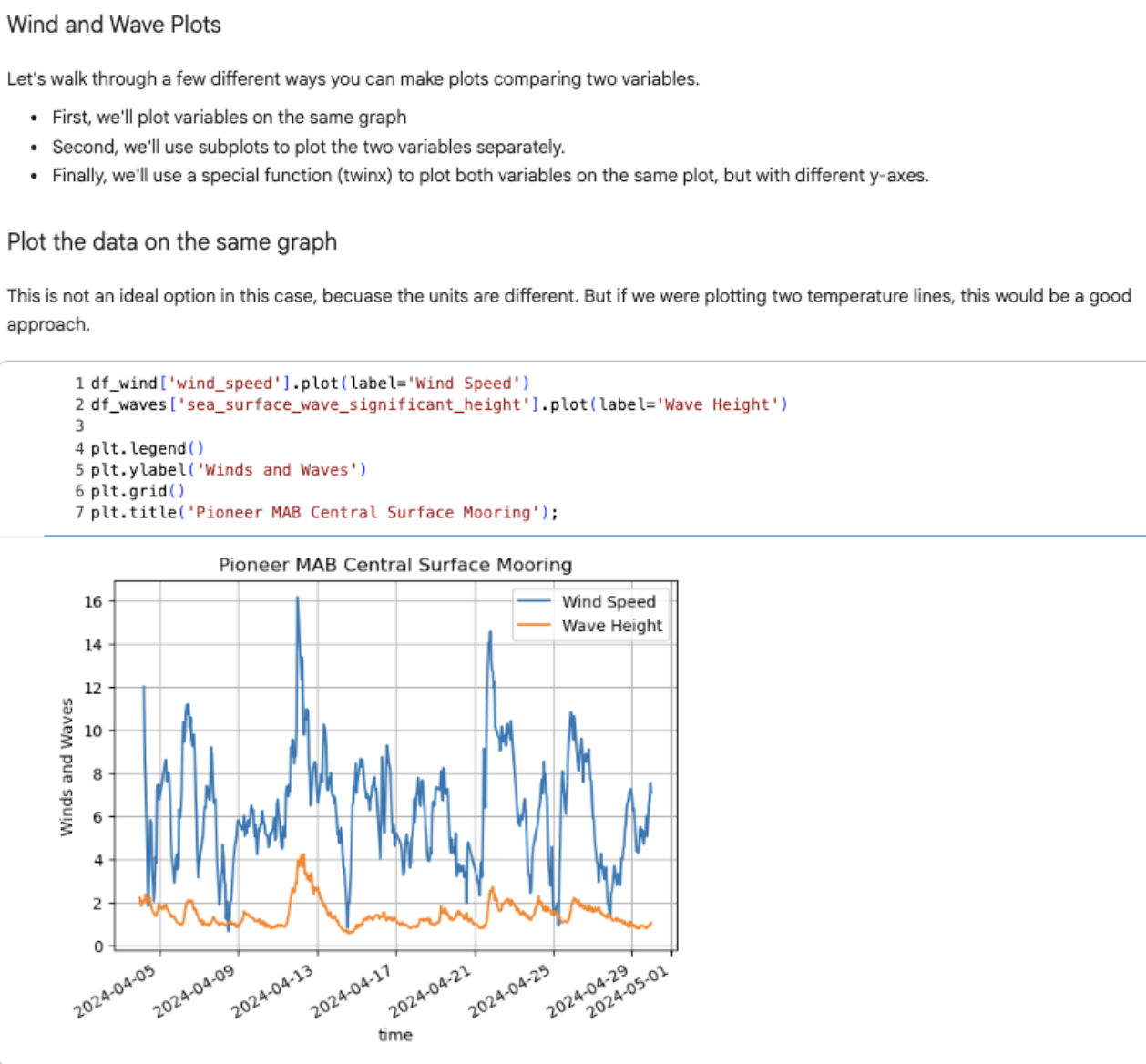
One possible format is a Python notebook.
Computational notebooks can be especially useful because they allow educators to scaffold student learning with data. A notebook can walk students through accessing a dataset, cleaning or preparing it, visualizing patterns, and interpreting results by first demonstrating an analysis, then guiding students through modifications, and finally allowing them to explore independently.
This approach can help students focus on the scientific concepts rather than getting stuck on technical barriers.
For example, a teaching notebook might guide students through examining seasonal phytoplankton blooms, comparing surface chlorophyll patterns, or exploring how storm events affect ocean conditions. The notebook format can make the workflow transparent, reusable, and adaptable for different course levels.
The slide deck included an example from the Ocean Observatories Initiative showing how a Python notebook can function as a teaching tool, with step-by-step code, explanatory text, visualizations, and opportunities for student exploration.
Building Ocean Data Teaching Resources
BCO-DMO is now asking educators to help shape this effort.
The key is the educator use case. By collecting these use cases, BCO-DMO can work with educators to develop teaching tools that address the three major challenges educators face when using real data in the classroom:
- Limited time
- Lack of ready-to-use materials
- Students’ limited quantitative or coding skills
The opportunity is simple but powerful so that we can assist eduactors with turning on student lightbulbs.
If you are an educator interested in collaborating with BCO-DMO, we invite you to complete our use case survey: bit.ly/Rep2Edu
Last modified: 2026-07-03 12:43:00